

Specialist in Adana for Atopic Dermatitis, Eczema treatment and fees. Dr. You can make an appointment with Pınar Bozkurt dermatology clinic.
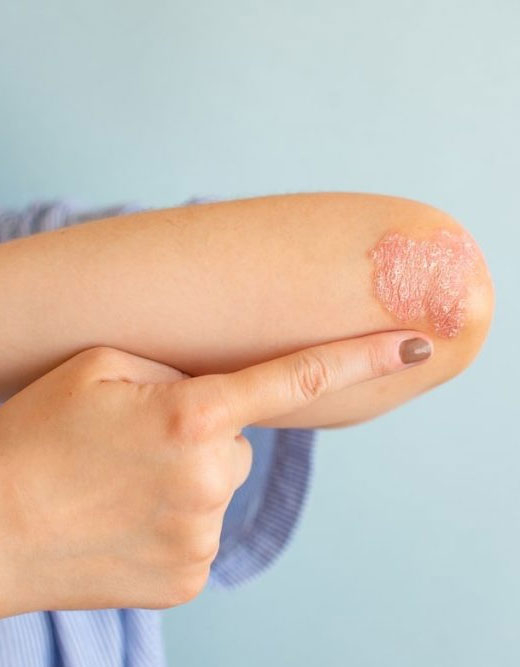
Atopic eczema (dermatitis); It is a recurrent skin disease that manifests itself with skin dryness, rash and itching, progresses with occasional exacerbations and improvements, and is more common especially in young children. Most individuals with atopic eczema have a personal or family history of allergic diseases such as asthma and flu. In infants and young children, signs of the disease are usually seen on the face, elbows, or inside of the knees, while in older children and adults, it is usually seen on the hands, neck, inside of the elbows, back of the knees, and ankles. Dryness, prolonged and hot baths, infections, stress, sweating, heat and climate changes, soaps, detergents, woolen clothes, dust and plant pollen, cigarettes, pet hair and some foods can cause an increase in complaints.
In treatment, moisturizers, cortisone creams, other anti-inflammatory creams, phototherapy and, in severe cases, immunosuppressive drugs can be used.
What is Eczema? How Is Eczema Treated?
Eczema; It is a type of skin disease that dries the skin, causing itching and sometimes blisters. It can be seen due to more than one reason. However, the exact causes of eczema are not fully known. As there are multiple factors that cause eczema, there are many types of eczema. The symptoms of eczema may vary depending on the types.
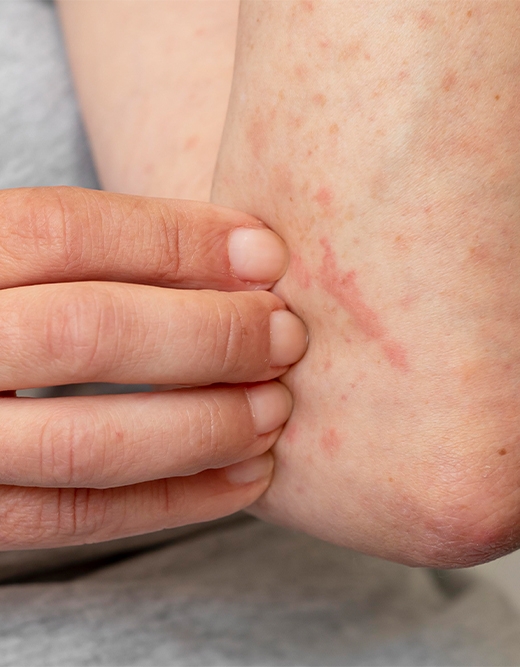
In eczema, various disorders are seen on the skin. Redness on the body, itching, blistering, drying and cracking of the skin are among these disorders. Due to eczema, the flaking and cracked skin causes the entry of microorganisms, and infection may also occur. For this, early diagnosis of eczema is very important. Although it is usually seen on the hands, legs and feet, eczema can occur anywhere on the body. Eczema is a disease that can be controlled with simple methods.
What are the symptoms of eczema?
Eczema manifests itself as blisters filled with water on the skin. Later, these blisters are replaced by crusting and dandruff, and thickening of the skin occurs. Although the symptoms of eczema are not seen in the same way in every patient, the symptoms in general are as follows: Itching in the body is among the symptoms of eczema. Some itching may become worse at night and may awaken from sleep. Even if there is no visible spot, it is useful to see a specialist without wasting time, as itching on the body is likely to be a symptom of eczema. Early diagnosis in eczema treatment is important to achieve successful results.
A physical examination and patch test should be done to diagnose eczema. The allergen revealed in the patch test should be investigated by dermatologists and then diagnosed. During the patch test, low concentrations of allergenic substances are adhered to the patient's back and observed after 48 to 72 hours. During this period, the person should not do sports, take a shower and should not engage in similar behaviors that may affect the test. If there is swelling, watering and redness in the area, it is determined that the patient is allergic to the substance applied to that area.
What causes eczema?
Genetic factors, allergies or various chemical materials used may play a role in the formation of eczema. The causes of formation may vary according to different types of eczema. Water, soap, detergent, other chemicals used, dusty environments pave the way for the formation of eczema. Those working in the cleaning industry, housewives and hairdressers are the groups most commonly affected by eczema. If eczema of allergic origin has occurred, even a small amount of contact with the allergen can cause eczema. Eczema caused by chemicals does not improve as long as the contact continues.
Especially in the winter months, the low humidity and the cold weather also increase the complaints related to eczema. Indoor heating systems drying out the living area, wearing thick clothes and applying a hotter bath can also trigger eczema.
What are the types of eczema?
Atopic Eczema
This type of eczema is a type of eczema that is seen as a host during infancy and childhood due to predisposition and environmental factors. Known as infant eczema, the disease may subside or disappear completely during adulthood. However, it is repetitive. In infants, eczema begins on the face in the first trimester, then spreads to the trunk, arms and legs. In childhood, atopic dermatitis can be seen on the inner parts of the joints, on the arms and legs. In adulthood, it can occur on the eyelids, ears, nipples, joints, and hands. Redness, scaling, itching, dryness and thickening of the skin are among the symptoms of atopic eczema.
Seborrheic Dermatitis
Although the cause is not completely clear, it can become chronic. It can be seen in oily areas of the skin. hairy says