

Specialist in Adana for shingles and its treatment. Dr. You can make an appointment with Pınar Bozkurt dermatology clinic.
Shingles, also known as night burns, is a viral skin disease that is often seen in advanced ages, often with redness on the trunk, and then with liquid-filled painful vesicles. After chickenpox in the past, the virus remains suppressed in the nerve roots along the spinal cord and occurs with the weakening of the immune system (especially in the elderly, those who have had physical and emotional stress, those who have a disease that weakens the immune system, and those who use drugs that suppress the immune system).
It usually begins as unilateral, burning-prickling pain in a specific area. These findings are followed by a red rash in the same area within 1-7 days. Over time, these reddened rashes, which are filled with liquid, then dry up and disappear. After the healing of the wounds, especially in some patients over the age of 60, the pain may continue in that area (postzoster neuralgia) and this period may last up to 12 months. Shingles causes chickenpox in people who do not have chickenpox and are at risk (immune system weakened, newborns, etc.).
Shingles can also clear up on its own within a few weeks. The aim of the treatment is to shorten the painful process and accelerate the recovery.
What is Shingles?
Shingles, with its medical name Herpes zoster; It is a painful, rash skin disease that affects sensory nerve cell groups (dorsal root ganglia) caused by the virus called "varicella zoster".
The first symptom of herpes zoster is pain, which can be very severe. Pain may be accompanied by skin sensitivity, fever, and malaise.
The time between the pain and the appearance of skin rashes is 2-3 days on average, sometimes this period can be up to 2 weeks.
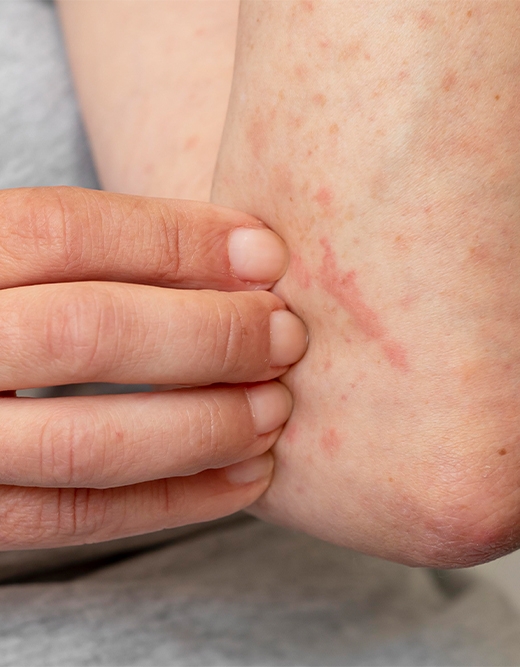
Skin rashes observed in shingles; It can be unilateral, not crossing the midline, located in the form of a belt, in the form of grouped water-filled bubbles on a red and edematous ground. These blisters can even become inflamed over time.
The lymph nodes in the area where the shingles are involved may swell and ache.
Shingles attacks usually heal within 2 to 4 weeks. Shingles usually does not leave scars, but if it becomes inflamed and sore, there is a possibility of scarring. In addition, in the elderly and those with poor general condition, the lesions may become necrotic (becoming dead tissue) and lead to serious scars.
Chest and head involvement is most common in shingles. Eye and facial nerves may be affected. In this case, vision loss and facial paralysis may also occur.
What are the types of shingles (herpes zoster)?
Ophthalmic zoster (eye involvement shingles): The nerve known as the trigeminal nerve (5th cranial nerve) has 3 branches: zone 1 (ophthalmic), which runs along the eye area, forehead, and nose; the 2nd region (maxillary), which runs along the lower part of the nose, cheeks, upper teeth, palate and upper jaw; the 3rd region (mandibular) that runs along the lower jaw, lower teeth, and lower lip. In ophthalmic zoster, the first branch of the trigeminal nerve is involved. This can lead to the appearance of lesions on the forehead and eyelids. Eyelid edema may be observed, and shingles lesions tend to be painful and bleed. It should also be monitored by an ophthalmologist because steroid use may be involved.
Oral zoster (oral shingles): When the 2nd and 3rd branches of the trigeminal nerve (lower part of the nose, cheeks, teeth, palate, chin, lips) are involved, shingles lesions may occur in the oral mucosa, hard palate, maxilla, tongue, and mandible. Typically, erythematous structures around the mucosa are observed.
Cranial zoster (cranial shingles): There is involvement of the nerves affecting the head and neck. In cranial zoster; Head and neck pain, lymphadenopathy and water-filled blisters (vesicles) may be observed on the erythematous background.
Otic zoster (ramsey-hunt syndrome): It occurs with the involvement of the nerves in the external auditory canal. Otic zoster usually; It begins with unilateral ear pain accompanied by tinnitus and dizziness. There may be a loss of taste sensation in the anterior 2/3 of the tongue. Ear pain and facial paralysis may develop.
What are the complications of shingles (herpes zoster)?
Shingles (herpes zoster) can cause many complications. The most common complications can be listed as follows:
Post-herpetic neuralgia: Pain that does not go away or newly emerges 30 days after the onset of shingles is called post-herpetic neuralgia. It can be observed more frequently in cases over 40 years of age. It can be a constant, burning pain or intermittent throbbing pain. Pain and sensitivity to ultraviolet, cold and touch may develop.
+ Bacterial infection
+ Peripheral nerve palsy
+ Deafness
+ Eye complications
+ Encephalitis, meningoencephalitis
+ Guillain-Barré syndrome
In people whose immune system is suppressed / weakened (such as AIDS, cancer patients, those receiving immunosuppressive treatment, etc.), shingles (herpes zoster) infection may progress more frequently and more severely. Complications are more common.
How is shingles (Herpes zoster) treated?
Anti-viral treatment within the first 24-48 hours
It can provide healing, prevent complications and reduce the period of pain that can be observed afterwards. The skin rash may need care as recommended by the doctor. Rest and fluid intake contribute to recovery.