
Specialist in Adana for Keratosis Pilaris disease and its treatment. Dr. You can make an appointment with Pınar Bozkurt dermatology clinic.
Keratosispilaris are small, hard bumps that make the skin feel like sandpaper. It is a very common and harmless picture. It is formed by the accumulation of dead cells called keratinocytes, which protect the skin from external influences, in the hair canal in the skin and blocking this canal.
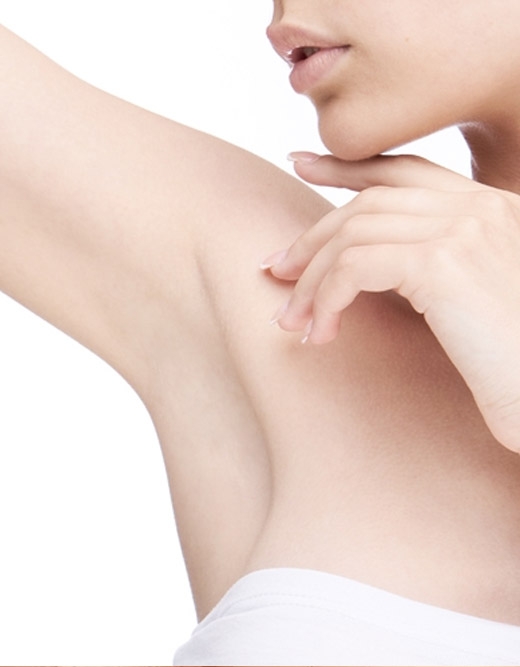
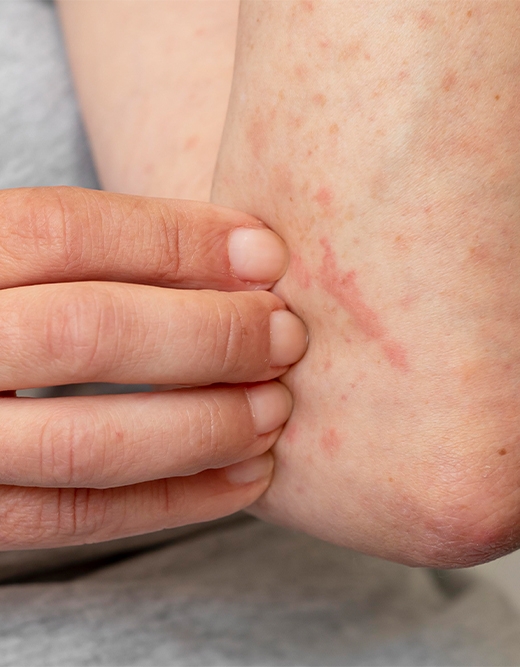
It usually appears as small bumps on the outside of the upper arms, buttocks, and very rarely on the face. Although it can be itchy from time to time, it is mostly cosmetically inconvenient.
Dry skin is more likely to have keratosispilaris. When there is less humidity in the air, it is usually exacerbated in the winter and the complaints decrease in the summer. It is more common in people with atopic dermatitis.
Keratosispilaris cannot be prevented, but its effects can be reduced by keeping the skin moist. Moreover; During the shower, washing with warm water for a short time and using moisturizing shower products also reduce complaints. Creams containing alpha hydroxy acid, lactic acid, salicylic acid or urea, which remove dead cells accumulated on the skin, should be applied to the affected area 2 times a day. Such creams moisturize dry skin and open clogged ducts. In addition, creams (topical retinoids) derived from vitamin A are effective by increasing cell turnover and preventing clogged hair ducts. The ingredients of these creams may cause skin redness, stinging or irritation, so care should be taken with young children.
It shows tosomal dominant inheritance. observed more frequently in women.
It is the mildest clinical form of differentiation-keratinization disorders of skin cells, keratinocytes.
It is seen on the outer parts of the arms and legs, face, hips and rarely on the trunk. It can be regional or widespread in the body.
It is clinically characterized by small blisters-follicular papules from the skin that match the hair structures. Slight dandruff can be seen on them. If you look carefully, you can see the curled hairs inside. The skin is dry. Skin with this clinical appearance; It resembles a plucked goose or chicken skin. In fact, the appearance of chilled skin in the cold is a better description.
If redness-erythema is detected around the keratosis pilaris-KP rashes, it is called “keratosis pilaris rubra”. Sometimes in this clinical form, only erythema can be observed without follicular plug.
If there is no erythema around the rashes in keratosis pilaris, only dandruff, it is called “keratosis pilaris alba”.
Itching may occur in some of the patients. The clinical appearance is more pronounced in the winter and decreases in the summer periods.
Apart from itching, it bothers patients more with its undesirable aesthetic appearance.
The clinical picture, which usually starts around 2-3 years of age, resolves spontaneously around the age of 20, decreases with small body area involvement or can continue throughout life and even increases with age.
Patients with a new onset or worsening clinical form due to hormonal changes during pregnancy have been reported.
KP also occurs in Vitamin B 12 and A deficiencies, thyroid hormone deficiencies, Cushing's disease and cortisone treatments.
KP can be seen together with some diseases. For example, Atopic Dermatitis, Ichthyosis vulgaris, keratosis pilaris atrophicans, erythromelanosis follicularis faciei et colli etc. like.
Keratosis Pilaris Atrophicans
Clinically, there is keratosis pilaris initially, but later on, tissue loss-atrophy develops in the disease areas. It is a serious aesthetic problem. Particularly Fractional CO2 laser treatments give effective results.
Ulerythema ophryogenes is a variant of it. It is observed on the face in children and causes permanent eyebrow loss with atrophy, especially in the eyebrows.
Erythromelanosis Follicularis Faciei et Colli
Follicular papules of keratosis pilaris with prominent erythema and darkening of color and hyperpigmentation are observed in the same areas. On the face, these areas are in the form of papules plaques that form sharply circumscribed rupees. In the body, only keratosis pilaris can be seen on the arms and trunk.
Treatment of Pilar Keratosis
KP often begins in childhood and decreases with clinical age. Especially at the age of 16. Clinical exacerbation may occur in a few patients. It does not go away completely, although it erodes over time.
The first thing to do in patients is to reduce the factors that increase the clinic, in short, dry the skin. Such as using soap for skin cleansing, long and hot tub baths, and lack of moisture in the air.
First, the skin should be moisturized. Moisturizers should also be keratolytic, that is, slightly exfoliating the upper layer of the skin. For this reason, it should contain lactic acid, salicylic acid and urea in addition to moisturizers.
For example, 2% salicylic acid in 20% urea is a good choice of moisturizer.
When these cannot be answered, creams containing retinoids can be used.
If there is too much erythema and reaction
Short-term cortisone-containing creams can be applied to these areas.
Treatment is symptomatic in mild forms and in children.
Oral synthetic vitamin A can be used in severe clinical cases.
Nd:YAG laser is used in KP with permanent and effective clinical results.