

For Pitriasis Rosea (Rose Disease) disease and its treatment, Specialist in Adana. Dr. You can make an appointment with Pınar Bozkurt dermatology clinic.
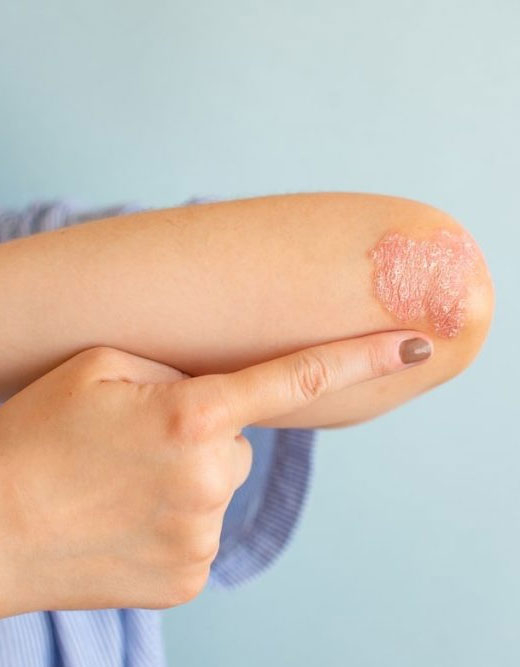
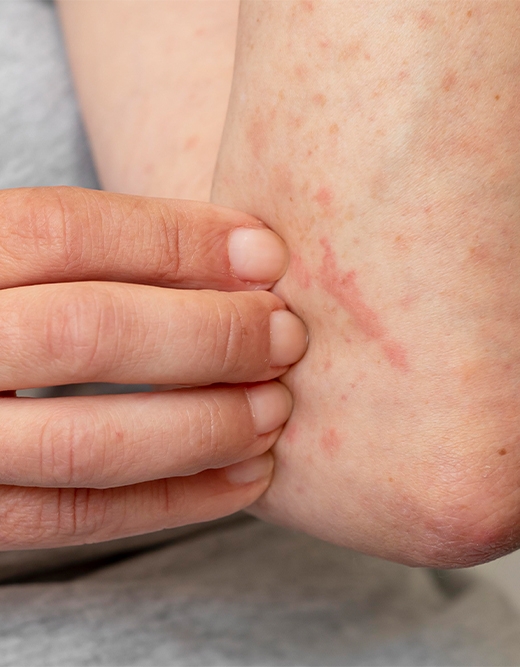
Pityriasis rosea; It is characterized by round-oval-shaped rashes, mostly on the trunk, with fine dandruff, pink color. Although it is claimed to be caused by viruses, the exact cause is unknown. The first rash is larger than the others and can spread to the whole trunk, arms and legs in about 2 weeks. A “Pine Tree” appearance may occur when the rash is particularly on the back. It is rarely itchy. The disease resolves spontaneously within 6-8 weeks. However, irritating the skin after the initial rash, called herald plaque, can increase symptoms. For this reason, skin-irritating baths should be avoided, scrubs should not be made in the bathrooms, the skin should not be scratched, and soft and cotton clothes should be preferred.
While moisturizers are sufficient in mild cases, antihistamine (itch reliever) tablets are recommended in itchy cases. In some cases, cortisone creams can be used for 1-2 weeks.
What is Rose Disease?
Rosacea, popularly known as rose disease; It is a chronic, persistent skin disease that affects the cheeks, nose, chin and forehead and is characterized by recurrent flushing, hot flashes, acne-like blisters, inflamed blisters and superficial vasodilation called telangiectasia.
Lesions that occur with rosacea are usually located symmetrically. A general redness of the face called "pre-rosacea" can be observed in patients before rosacea.
Types of Disease According to the Symptoms of Rose Disease
If redness and telangiectasias (superficial vasodilation) occur together, "erythematotelangiectatic rosacea"
If redness and edema occur together, "edematous rosacea"
If acne-like skin symptoms are accompanied by cysts, it is called "rosacea fulminas" (rosacea fulminas is the most severe form of rosacea and can sometimes be confused with cystic acne).
In rosacea, a condition called rhinophyma, which develops due to the overgrowth of the sebaceous glands on the nose, can also be observed. The most common lesions in rosacea are acne-like blisters and pustules (inflamed blisters) appearing on a reddened surface.
In severe cases, cysts, hard nodules called "granulomas", scars and rhinophyma may occur in the advanced stages. Rarely, an area of persistent lymphedema may be seen (Morbihan's disease).
Who gets rosacea and why?
Rose disease (rosacea) is a skin disease that usually occurs in women in their 30s, especially in blonde, fair-skinned people. Its incidence in women is approximately 10%. Although it is rarer in men, it progresses more severely than women. Rosacea lesions usually increase with stress.
The cause of rose disease has not been fully explained. There are different hypotheses put forward in this regard.
Unlike acne vulrgaris (acne), increased sebum (oil secretion) production, blockage of follicle (hair sac) mouths or bacteria settled in the hair follicle are not in question in this disease.
The main problem in rosacea is thought to be in the small veins of the skin. The blood vessels are dilated. Enlarged blood vessels and redness-warmth cause fluid to leak into the dermis layer of the skin, resulting in the development of an inflammatory reaction. It is possible to list many factors that can cause rosacea:
+ Digestive system diseases
+ Problems in the bile ducts
+ Demodex folliculorum (a type of parasite)
+ Genetic traits
+ Hot and sun rays
+ Alcoholic beverages
+ Psychological factors
+ Extremely hot drinks
+ Hot water baths
+ Environmental temperature changes
What are the symptoms of rosacea?
Rose disease (rosacea) is a skin disease that affects the face (cheek, nose, chin and forehead), and different complaints and symptoms can be observed depending on the severity of the disease.
Period before rosacea:
In the midline of the face, sudden attacks of redness and then fading occur against sun rays, stress, hot and cold drinks, and temperature changes. It takes longer for the redness to subside over time. At this stage, skin symptoms are usually tried to be soothed with moisturizers and sunscreens.
Stage 1: The redness described in the previous stage becomes permanent and may remain for hours or even days. Telangiectasias, ie capillary enlargement, may occur. There is extreme sensitivity and burning sensation on the skin.
Stage 2: Papules (swelling) and pustules (inflamed bumps) that can last for weeks can be observed. The redness has become more pronounced. Involvement may also occur on the entire face and scalp. There are itchy, inflamed bumps on the scalp, but they are sterile. It may be the beginning of eye involvement.
Stage 3: Tissue hyperplasia (increase in the number of tissue forming cells), large inflammatory, painful nodules may be observed. Rhinophyma (sebaceous glands on the nose)
growth of the nose due to excessive growth of the nose) may develop.
Permanent edema of rose disease: First of all, there is edema on the forehead, between the two eyebrows, on the nose and cheeks, which does not leave pits. It is not a very common occurrence.
Eye localized rosacea: Eye involvement in rosacea is common. Rosacea with eye involvement; Also called "ophthalmic rosacea". The disease may start directly from the eye and therefore may be overlooked in the diagnosis.
It can cause serious eye problems.
Rose disease (rosacea); Since it is a skin disease that settles on the face, it can cause serious psychological problems in some people. (The long-lasting red bumps that occur in rosacea can cause feelings of embarrassment, anxiety (state of anxiety), lack of self-confidence, and eventually depression)
Rose disease (rosacea) treatment
As with many chronic diseases, rosacea may require long-term treatment.
The treatment principles of rosacea are determined based on the cause and observation. Therefore, there are multiple treatment alternatives.
In most patients, rosacea can be successfully treated.
It is important to stay away from triggering factors such as sun, heat and alcohol as much as the drugs used in the treatment. Therefore, the patient's contribution to the treatment is great.
Drugs used in the treatment of rosacea;
+ Externally applied drugs only in people with papules (swelling) and pustules (inflamed blisters); metronidazole, clindamycin, permethrin cream, tretinoin cream, and azelleic acid cream.
+ If skin lesions are more common and severe, oral antibiotics such as tetracycline, ampicillin, metronidazole, chloramphenicol, erythromycin can also be used. However, these drugs can have side effects. Oral treatments are initially used in combination with externally used drugs. When the condition of rosacea begins to improve over time, oral treatments are discontinued and the well-being is tried to be maintained only with external drugs.
+ Patients with very severe and resistant rosacea; They may need 13-cis-retinoic acid treatment. However, this treatment method has significant side effects. The most common side effects are; dryness of the skin, sensitivity, dryness of the mucous membranes, dryness of the eyes, itching, dermatitis, muscle pain, deterioration in liver tests, increase in blood cholesterol and triglyceride levels. It should never be used in pregnant women as it may cause handicapped delivery.
+ Hypotensive drugs can also be used to prevent redness and warmth in rosacea.
+ In the treatment of rosacea, methods such as laser therapy and facial massage for telangiectasias (superficial vasodilation) can be applied as alternative treatments.
+ Although rosacea is a common skin disease, it is controversial which type of treatment should be chosen or combined in which clinical type. Different data on the redundancy and effectiveness of options can lead to confusion. For this reason, a personalized treatment approach should be followed for each patient and the aim should be to maximize the patient's quality of life.
+ If rosacea is not treated, it can lead to permanent scars in a highly visible area such as the face, as well as psychological disorders.
How is rosacea diagnosed?
+ Differential diagnosis of rose disease (rosacea) may differ according to its clinical features.
+ Diagnosis of rosacea is made according to clinical findings, laboratory is helpful. The most useful method is histopathological examination.