

Specialist in Adana for Keloid Scar treatment and fees. Dr. You can make an appointment with Pınar Bozkurt dermatology clinic.
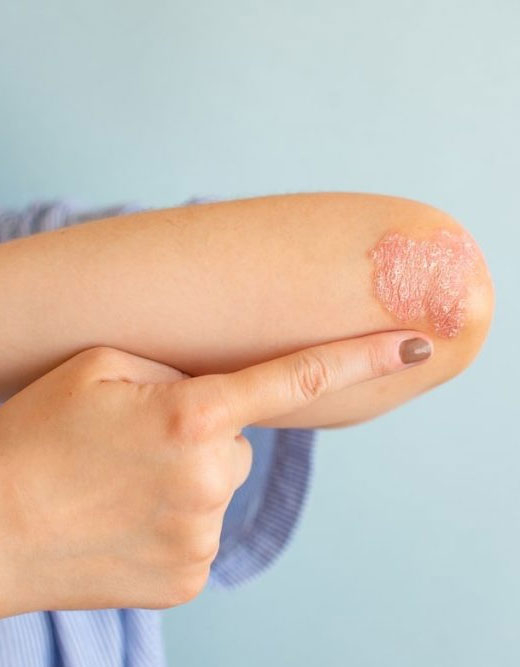
It is a condition characterized by the development of excessive scarring on the skin, especially on the upper parts of the body, which affects people functionally and cosmetically, as a result of the uncontrolled response in wound healing, which may be slightly raised from the skin, pink, red-colored or skin-colored. It may disappear on its own.
In the treatment, creams, injection into keloid, cryotherapy and laser treatments are applied. Direct surgical removal of scar tissue is not appropriate, surgery may result in further enlargement of the initial scar tissue.
The methods used in the treatment of Keloid, Hypertrophic Scars and Scars are listed below.
Surgical Removal
Excision of keloids alone is not a successful treatment method. The recurrence rates of lesions after surgery vary between 45% and 100%. Surgery is often used in conjunction with other treatment methods. Such as pre-surgical cortisone application, post-surgical PDL laser application or post-surgical application of imiquimod cream. In this way, combined treatments are extremely effective especially in keloidal structures with peduncles.
Injection of Cortisones (Triamcinolone) into Diseased Tissue
One of the most commonly used methods in the treatment of keloid and hypertrophic scars is the application of steroids into the lesion, because they are easily applicable and obtainable, well tolerated by the patient, and successful in reducing symptoms. For this purpose, although cortisones such as dexamethasone, hydrocortisone acetate and methyl prednisolone are used, triamcinolone acetonide is frequently used. It suppresses collagen synthesis and inhibits fibroblast activity in the application area. 1-2 cm2 according to the surface area of the keloid: 20-40 mg; 2-6 cm2: 40-80 mg; 6-12 cm2: 80-120 mg is administered.
It is done at intervals of 1-4 weeks. Although it can be used for longer than 6 years depending on the clinical response, 3-4 applications are often sufficient.
This application can be continued until the flattening of the scar is achieved. Although its use alone can alleviate the weight of the keloid, it does not completely destroy it.
After one or more doses are applied before the keloid surgery, the keloid is surgically removed and the cortisone injection treatment is continued after the surgery. This is the most commonly used treatment protocol.
It can be used in conjunction with cryotherapy. First cryotherapy is done for 2-4 minutes. Cortisone is applied 15 minutes later.
Side effects of the application are atrophy, hypopigmentation, depigmentation, telangiectasia and skin necrosis.
It is more effective when used together with cryotherapy. It can be used in silicone after this application.
Depending on the application of cortisone, the storage of the drug under the skin may cause small white plaques in the scar tissue.
5-Fluorouracil, 5-FU; It is a pyrimidine analog and suppresses cell DNA synthesis. It is used in kelod and scars because it reduces fibroblastic activity when applied to the skin. 5-FU (50 mg/mL) is used once a week for 12-20 weeks into keloid. Especially when applied to the surgical area after surgical treatment for scar and keloid, it suppresses the re-development of keloid and hypertrophic scars in this area. There is pain and itching at the application site. Most of the patients develop hyperpigmentation in the application area.
Although it is an antineoplastic, that is, cancer drug, it is used in keloids. Successful results were obtained with the use of IL 1.5 IU/mL.
Although it is an antihistamine, it is used as an injection into the scar like cortisone.
Interferon into the diseased area is being investigated experimentally for the treatment of keloid and hypertrophic scars. Interferons inhibit the ability of fibroblasts to synthesize collagen. Interferon gamma has been found to be effective.
It suppresses fibroblasts with its antineoplastic effect.
It is a calcium channel blocker. It suppresses collagen production and increases collagen destruction. It is made into the cleoid. In addition, after keloid surgery, it can be applied to the inside of the lesion.
Concomitant use of cortisone and 5 FU; Triamcinolone acetonide (10 mg/mL) and 5-FU 50 mg/mL (the mixture is prepared at a ratio of 0.1 ml: 0.9 ml) is administered into the scar tissue in doses of 0.02-0.35 mL. After the application, slight bruises develop in the application area, which lasts for 7-10 days. In addition, since 5 FU causes hypersensitivity to the sun and light, the application area should be protected from UVA and UVB with products with a high protection factor for at least 7 days.
5 combinations;
0.25 ml fluorouracil
0.25 ml verapamil
2 ml 1% lidocaine (with epinephrine)
0.25 ml 40 mg/1 cc triamcinolone acetenoid
0.25 ml sodium bicarbonate
This mixture is repeated every 2 – 4 weeks into keloid and hypertrophic scars and 0.25 – 0.5 ml is applied.